Consultation Required
Yes
Where Vein Care
Gets Specific
Yes
Varies by Area
None
5 to 15 Days
Sclerotherapy may make sense when smaller vein problems still affect how your legs feel, function, or heal.
Leg heaviness, aching, swelling, or pressure can signal vein disease. If those symptoms keep showing up, an evaluation can tell us where they start.
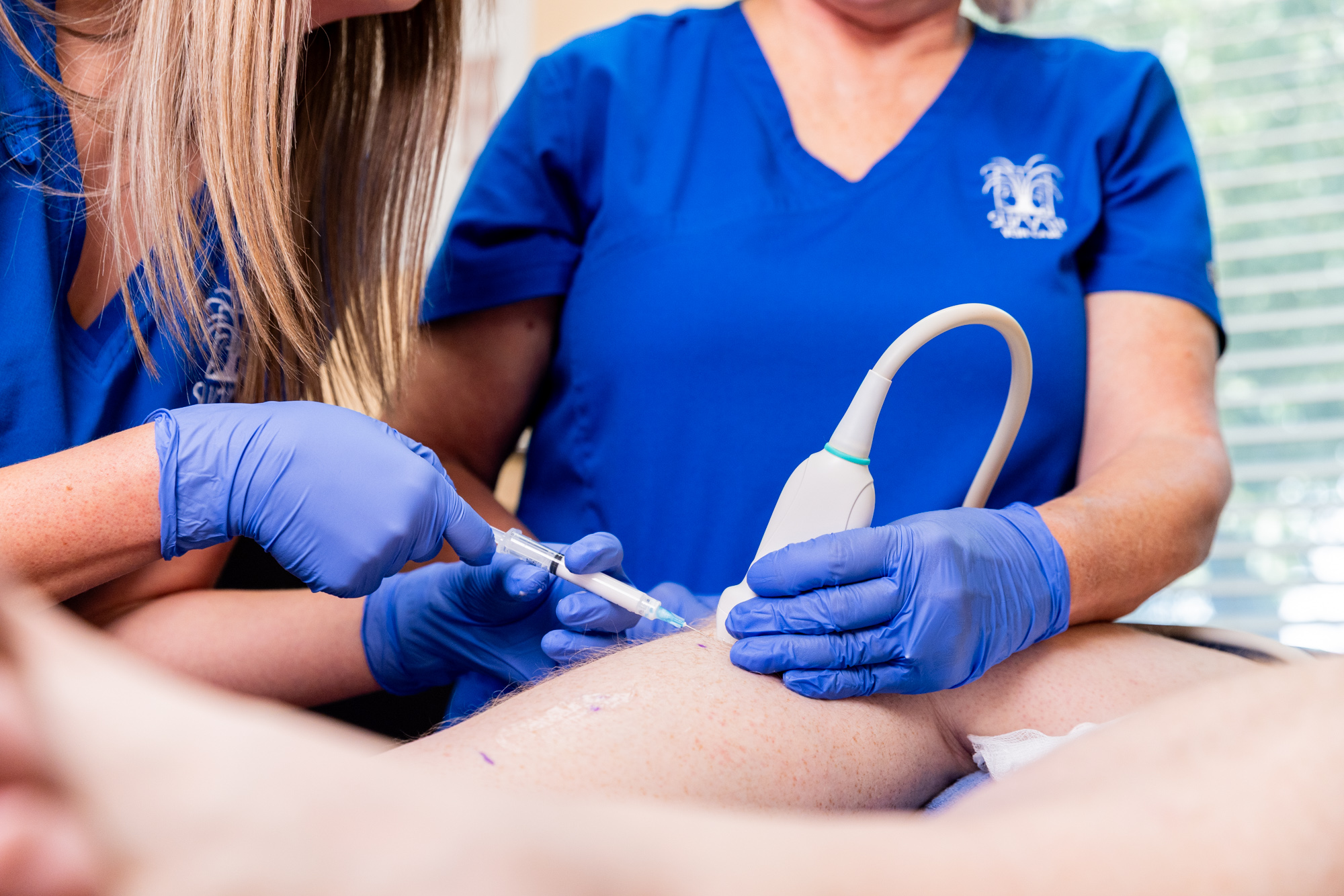
Visible blue, purple, or raised veins may connect to an underlying circulation issue. Using ultrasound technology, we assess beneath the skin before we recommend injections.
Summit Vein Care treats vein disease, not cosmetic spider vein concerns. If your goal is cosmetic-only treatment, we recommend our sister clinic—Roots of Nature.
You do not need to know which treatment you need before you call. We use imaging and exam findings to decide if sclerotherapy belongs in your plan.
How We Work
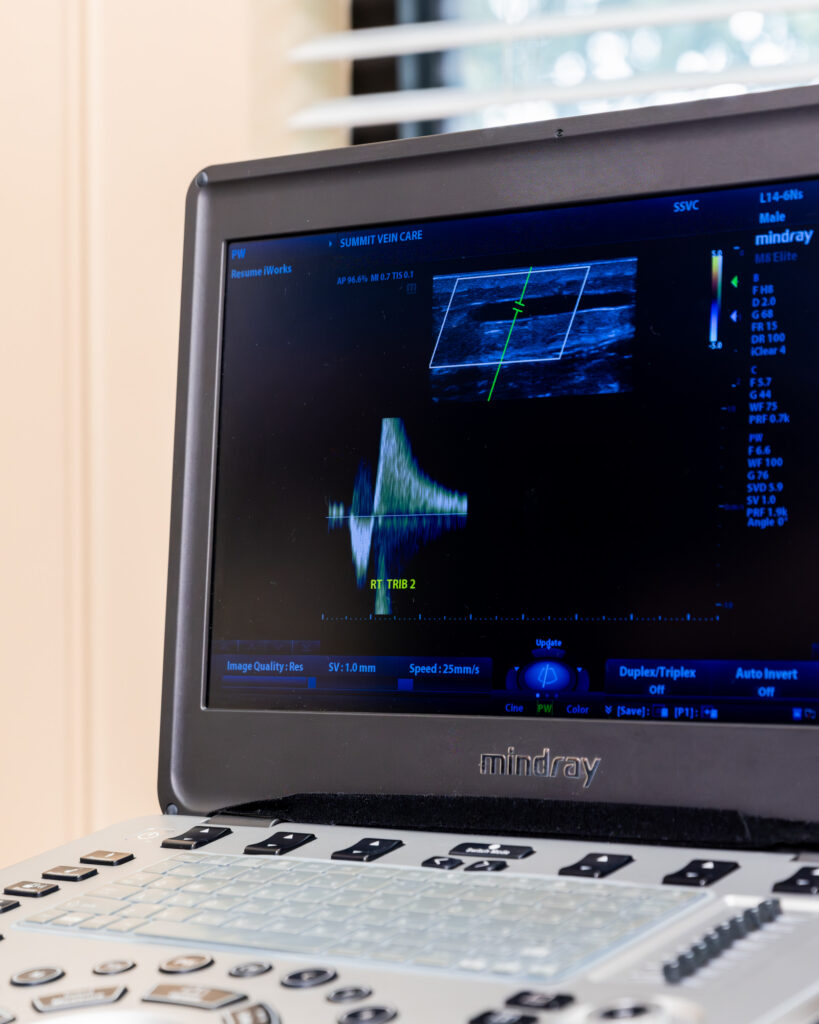
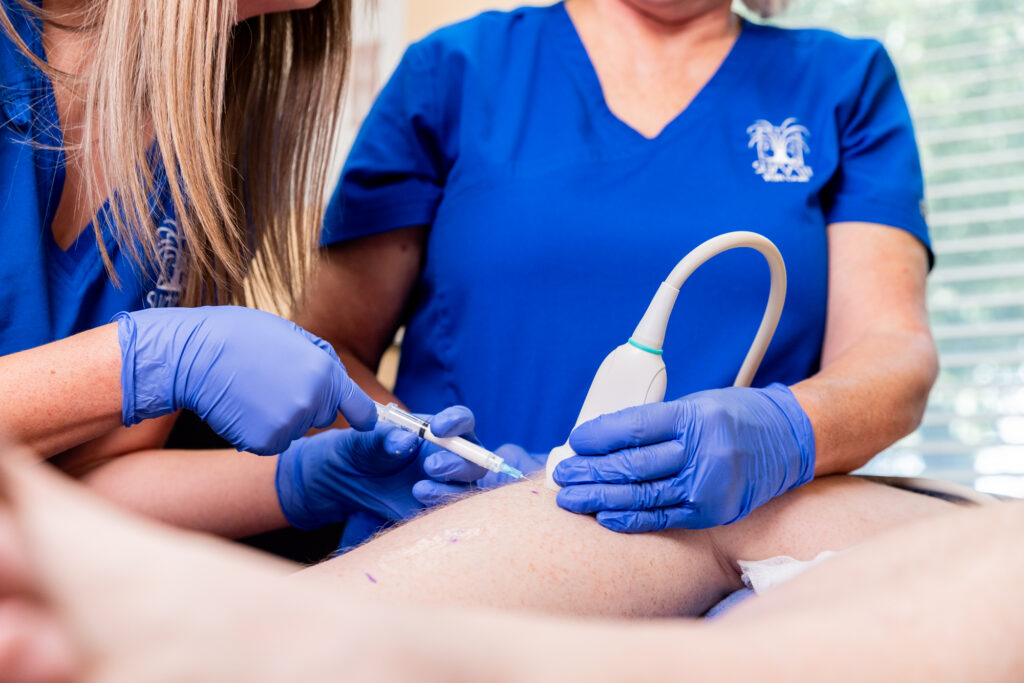
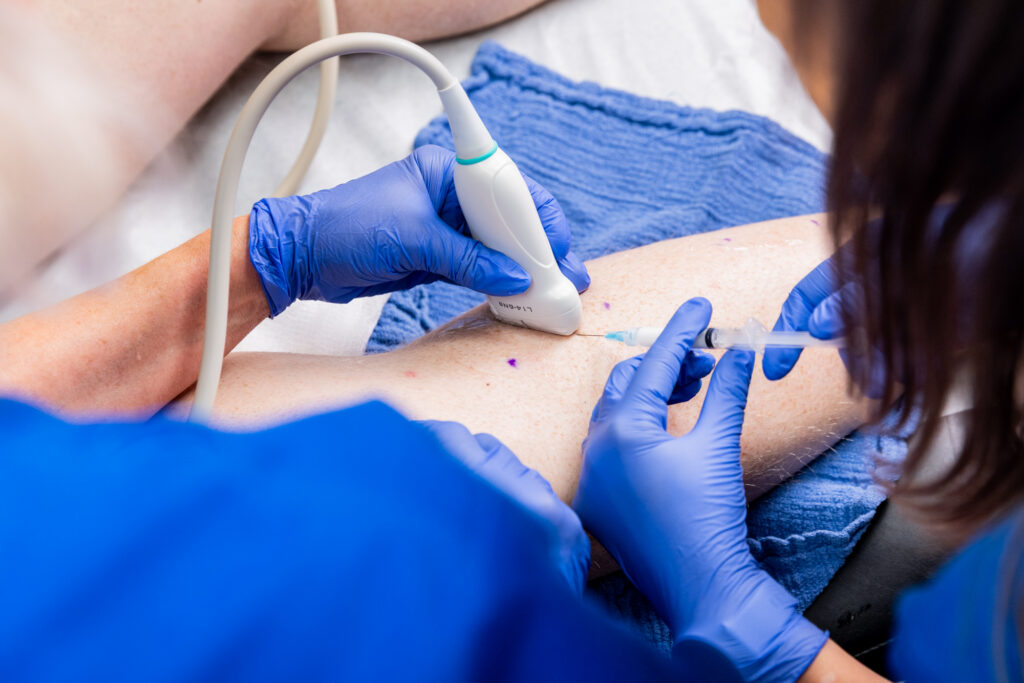
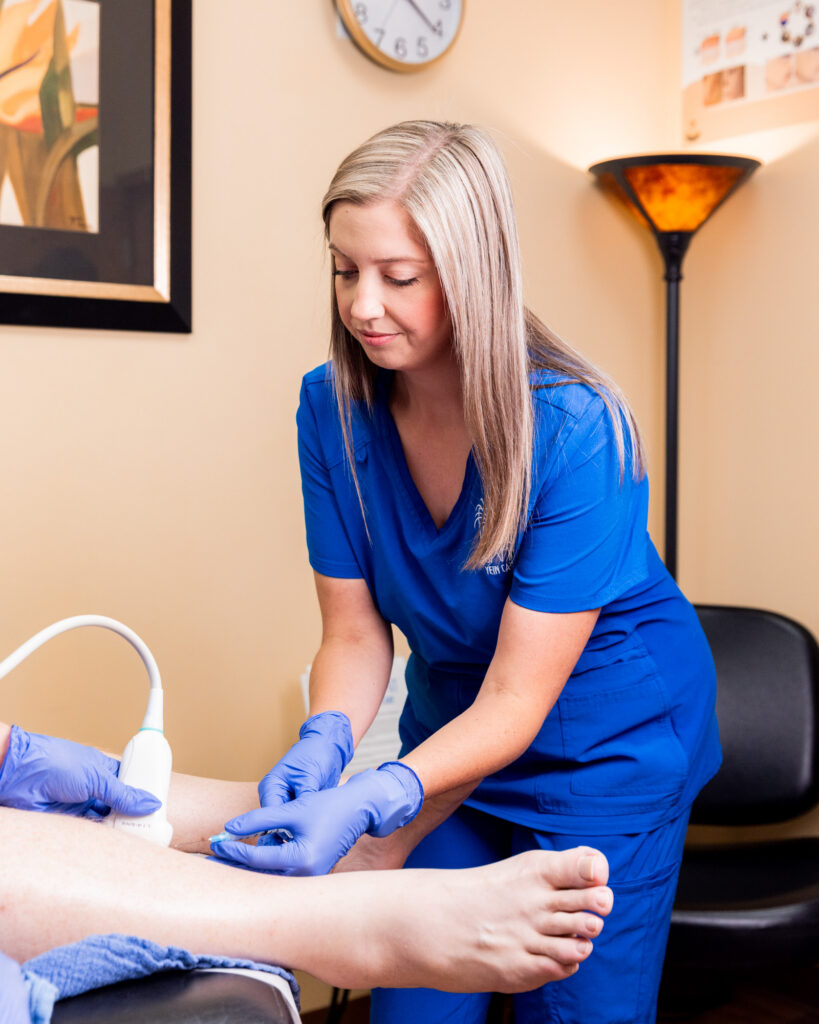
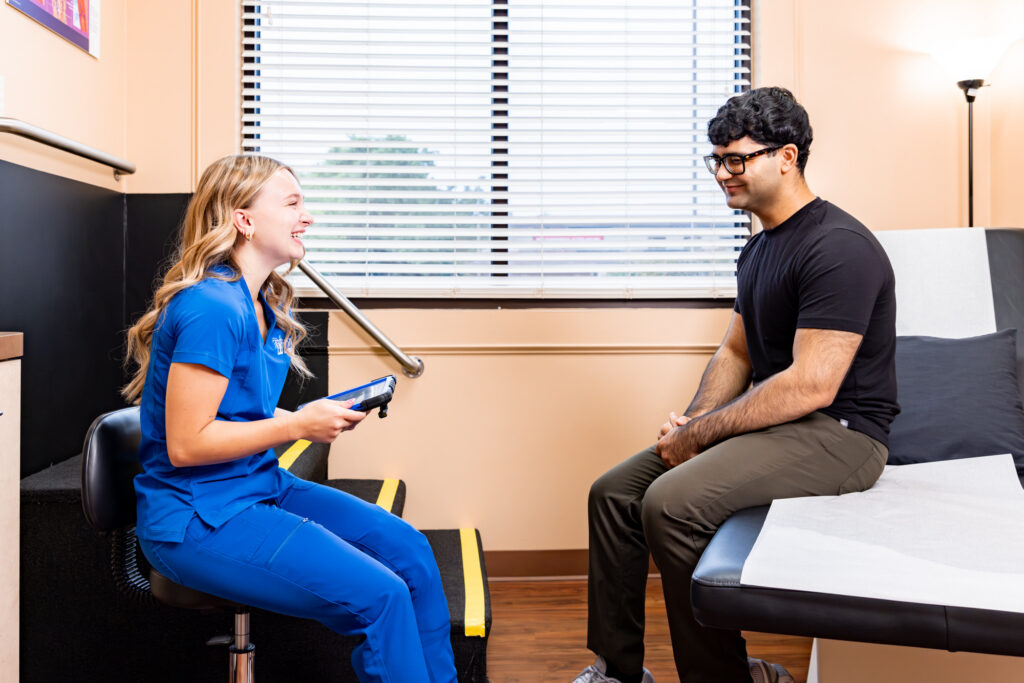
Our ultrasound team performs a 15-minute screening to check for reflux in your veins. If your screening is positive, we’ll recommend a new patient appointment for a full ultrasound and provider evaluation.

Typically, we use ultrasound-guided sclerotherapy later in a treatment plan, after treating larger underlying veins with EVLA or EVCA.
The treated vein closes so blood moves through healthier nearby veins instead of pooling in the damaged one.
You’ll be able to return to normal activity after treatment, and walking may help support recovery.

Your provider will give you clear aftercare instructions before you leave.
We will ask you to wear compression garments after treatment. These help support healthy vein flow as the treated vein closes.
Avoid hot baths, hot tubs, saunas, and direct heat until your provider clears you. Heat can affect healing in the treated area.
You can return to normal activity, but your provider may ask you to avoid strenuous exercise for a short time after treatment.
Follow-up care helps the team confirm healing, track progress, and decide whether another session belongs in your plan.
About Us
As a privately owned, specialist-only practice, we’ve been treating vein disease in Kansas City since 2005. Every patient knows their out-of-pocket cost before their appointment day. And when a procedure isn’t necessary, we’ll tell you that, too.
Sclerotherapy works by placing a medical solution directly into a vein. The solution causes the vein walls to collapse and close, so blood reroutes through healthier nearby veins.
Over time, your body naturally absorbs the treated vein. At Summit Vein Care, we provide sclerotherapy in Kansas City as part of a step-by-step medical vein care plan, often after imaging shows which smaller veins need attention.
Yes. Before sclerotherapy, we need to understand which veins need treatment and whether sclerotherapy belongs in your care plan. Many patients start with a free quick scan, which gives us a clearer look at what may be happening beneath the skin.
For patients interested in sclerotherapy in Kansas City at Summit Vein Care, imaging helps our team determine the next steps and decide whether sclerotherapy would be an option.
At Summit Vein Care, we typically treat larger vein concerns first. At Summit Vein Care, many treatment plans begin with EVLA or EVCA to close larger varicose veins first. That order is important because visible veins may connect to a larger circulation issue.
Sclerotherapy can treat smaller varicose veins in certain care plans. Larger varicose veins may need a different first treatment, such as laser ablation, before injection-based treatment makes sense.
The number of sclerotherapy sessions depends on your veins, symptoms, and treatment plan. Some patients need 1 session, and others need 3 or more.
We use ultrasound imaging and exam findings to explain what we see before treatment begins. For patients looking for sclerotherapy in Kansas City, getting clarity about their treatment is important. You should know why we recommend injections, how many visits may make sense, and what role each appointment plays in your vein care plan.
Endovenous Laser Ablation (EVLA) uses a small fiber and laser heat to close larger problem veins. Sclerotherapy uses a fine needle injection to treat smaller veins, often after your provider addresses the larger issue.
We provide both EVLA and sclerotherapy in Kansas City, but they serve different roles. EVLA usually treats the larger source vein first. Sclerotherapy helps close smaller branch veins that still need attention after that step.
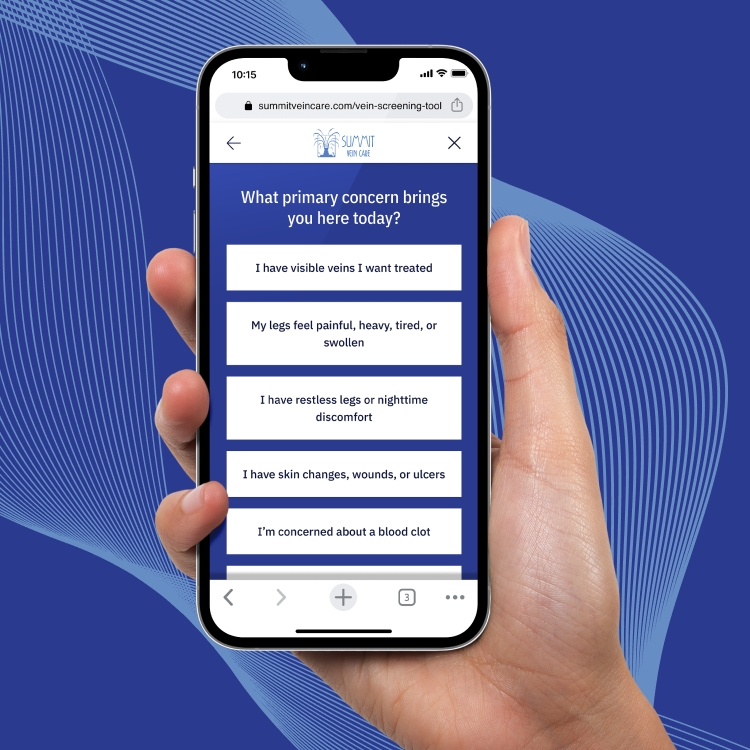
Not sure if your symptoms are vein-related? Start with our screening tool. When you’re ready to come in, schedule your free quick scan.